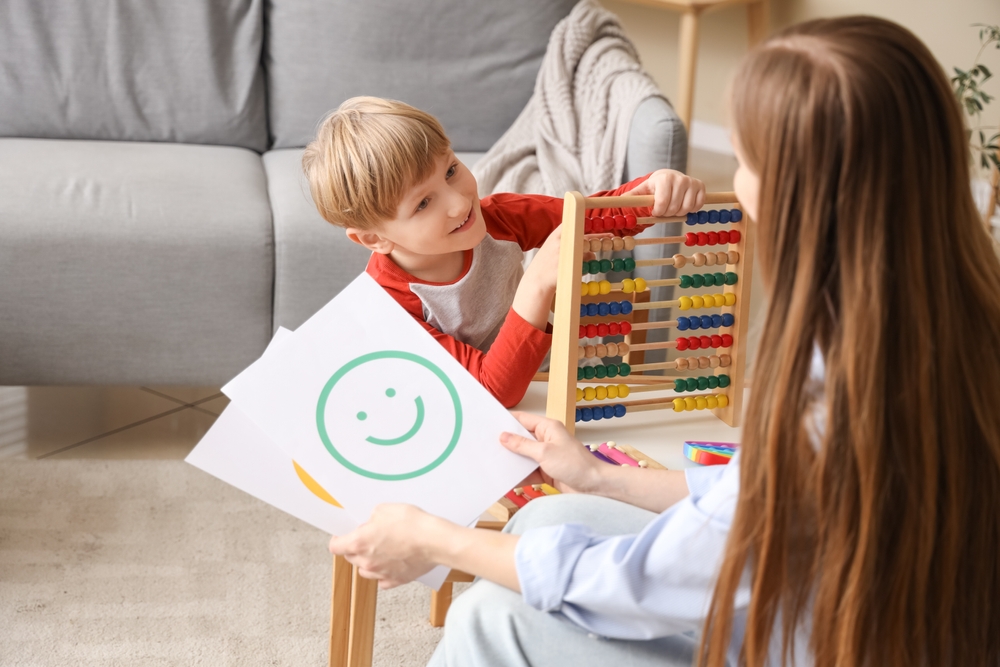
Play is one of the most natural and joyful ways for children to learn about the world around them. From stacking blocks to pretending to cook dinner, every playful moment helps children develop essential communication, problem-solving, and social skills. For children with autism, play is not just recreation: it can be one of the most effective ways to encourage growth and confidence.
At Modern Hope Autism Center, we believe that learning should be engaging and meaningful. That is why we integrate play-based ABA therapy into our approach, allowing children to develop new skills through fun, interactive activities. By using play as a foundation, our therapists help children build communication, cooperation, and independence in a way that feels natural and enjoyable.
Let’s explore how play becomes a powerful tool for progress in ABA therapy and how our Winston-Salem ABA center makes learning through fun and exploration possible for every child.
Understanding ABA Therapy and Its Purpose
Applied Behavior Analysis, or ABA, is a science-based approach that helps children with autism learn new skills and reduce challenging behaviors through structured teaching and reinforcement. It focuses on understanding how behavior works, what motivates it, and how positive reinforcement can encourage meaningful change.
At its core, ABA therapy is about helping children achieve greater independence and success in daily life. Skills such as communication, self-care, attention, and social interaction are broken down into smaller, achievable steps. These small successes are then reinforced through praise, rewards, or favorite activities.
When ABA therapy is blended with play, the learning process becomes even more powerful. Children engage more willingly, practice skills more frequently, and begin to see learning as something fun rather than intimidating.
What Is Play-Based ABA Therapy?
Play-based ABA therapy uses the principles of Applied Behavior Analysis but delivers them in a playful, child-centered way. Instead of sitting at a table for formal instruction, therapy takes place through games, toys, movement, and imaginative play.
The goal is to teach life and social skills in the same context where children naturally use them: during play. Whether a child is learning to take turns during a board game, practice conversation while role-playing, or develop motor coordination through building blocks, every activity is carefully chosen to target specific developmental goals.
For young children especially, play-based sessions help build trust, reduce anxiety, and make therapy something they look forward to.
At Modern Hope Autism Center, our therapists use play to help children connect with others, explore new ideas, and build the foundational skills that lead to lasting progress.
Why Play Works
Play isn’t just fun: it is essential for development. Through play, children learn to interact, express themselves, and make sense of their environment. For children with autism, who may struggle with communication or social understanding, play provides a safe and enjoyable way to practice these skills.
Here’s why play is such an effective teaching tool in autism therapy:
It encourages engagement. Play captures a child’s interest and attention, which makes it easier to teach new concepts and behaviors.
It builds relationships. Shared play creates opportunities for connection between the child and therapist, helping build trust and rapport.
It promotes imitation. Many skills, like waving, sharing, or using language, begin with imitation. Play provides a natural setting for children to copy and practice behaviors.
It supports emotional regulation. Through fun and repetition, children learn to handle excitement, disappointment, and frustration in a safe environment.
It leads to generalization. When skills are learned in a play context, children are more likely to use them naturally in daily life.
Play helps children see learning as something enjoyable rather than a task, and that shift in mindset can make all the difference.
Examples of Play-Based ABA Techniques
At Modern Hope Autism Center, play-based therapy looks different for every child. Our therapists customize activities based on age, interests, and developmental goals. Here are a few ways play is incorporated into ABA sessions:
1. Pretend Play for Social Skills
Pretend play is one of the best ways to encourage social interaction and imagination. Children might act out going to the grocery store, visiting a doctor, or cooking in a toy kitchen. These scenarios teach conversation skills, problem-solving, and cooperation.
2. Turn-Taking Games
Simple games like “Simon Says,” stacking blocks, or rolling a ball back and forth help children learn patience, focus, and teamwork. These activities also promote motor coordination and help children understand social rules like waiting for their turn.
3. Sensory Play
For children who enjoy tactile experiences, sensory play using sand, water, or textured materials can be calming and stimulating. While playing, therapists can introduce concepts like counting, describing textures, or following directions.
4. Building and Creative Activities
Building with blocks, drawing, or crafting helps children improve fine motor skills and hand-eye coordination. These activities also encourage creativity and planning while allowing therapists to work on following instructions and completing tasks.
5. Play for Communication
Games that require labeling objects, answering questions, or describing actions support language development. For example, a therapist might use toy animals to teach vocabulary or play matching games to practice naming colors and shapes.
Every playful moment is an opportunity to learn. What looks like simple fun to a child is actually structured learning guided by a skilled therapist.
Teaching Life Skills Through Play
Life skills, such as getting dressed, brushing teeth, or helping with chores, are essential for independence. Through play-based ABA therapy, these skills can be introduced in fun, hands-on ways.
For example:
Playing “house” can teach routines like setting the table or cleaning up toys.
Pretending to run a store can help children practice money concepts, greetings, and social interactions.
Cooking activities with toy food or real ingredients (under supervision) can teach sequencing and safety awareness.
By learning through play, children gain practical skills in a setting that feels natural and enjoyable. This approach reduces resistance and builds a stronger sense of confidence and competence.
Building Social and Emotional Growth
Social interactions can be difficult for children with autism, but play offers a comfortable way to practice these skills in real time. During play, children learn how to:
Initiate interactions with others.
Recognize and respond to social cues.
Manage emotions during cooperation or competition.
Express empathy and share enjoyment.
At Modern Hope Autism Center, our therapists guide children through social play scenarios that build awareness and connection. Whether it’s playing a team game or sharing a toy, these experiences lay the groundwork for meaningful relationships both inside and outside of therapy.
Parental Involvement in Play-Based Learning
Parents play a vital role in extending progress beyond the therapy room. Our Winston-Salem ABA center encourages families to continue play-based learning at home.
We teach parents how to use simple games, routines, and playful moments to reinforce therapy goals. Activities like building puzzles together, playing catch, or reading interactive books can strengthen the parent-child bond while supporting ongoing skill development.
When families embrace play as a learning tool, children receive consistent reinforcement in multiple settings, which accelerates progress and builds confidence.
Why Modern Hope Autism Center Uses Play-Based ABA
At Modern Hope Autism Center, we believe that every child deserves to learn in a way that fits their unique personality and interests. Play is the bridge that connects therapy goals with real-world experiences.
Our play-based ABA programs are:
Individualized: Each child’s program is tailored to their needs, strengths, and preferences.
Engaging: We use toys, games, and activities that keep children motivated and excited.
Evidence-Based: Our methods are rooted in proven ABA principles that produce measurable results.
Supportive: We create a positive, nurturing environment where children feel safe to explore and grow.
By blending structured teaching with play, we help children develop life skills, communication abilities, and social confidence — all while having fun.
The Joy of Learning Through Play
At the heart of every successful ABA session is a moment of joy: a smile when a child accomplishes something new, a burst of laughter during a game, or a moment of connection with a therapist or peer. These joyful experiences are what make learning stick.
Play-based ABA therapy transforms education into an adventure. It allows children to explore, experiment, and discover their abilities in a way that feels natural and rewarding. Over time, these playful interactions build the foundation for lifelong learning and confidence.
Experience the Difference at Modern Hope Autism Center
If you are looking for compassionate and effective autism therapy that focuses on your child’s happiness and growth, Modern Hope Autism Center is here for you.
Our Winston-Salem ABA center offers play-based programs that help children build essential skills while enjoying the process of learning. We believe that progress comes from connection, trust, and joy — and that play is one of the best ways to achieve all three.
Contact Modern Hope Autism Center today to learn more about our play-based approach and how we can help your child thrive through fun, exploration, and meaningful progress.
Because when learning feels like play, every day becomes a new opportunity for discovery and success.
At Modern Hope Autism Center, our mission is to provide children diagnosed with Autism the opportunity to grow, thrive, and succeed through personalized Applied Behavior Analysis Therapy (ABA). We believe that ABA therapy is not just a short-term intervention but a long-term strategy designed to create lasting independence and life success. Through thoughtful goal setting, transition planning, and compassionate support, we guide families across Winston-Salem and the Triad in building independence through ABA therapy.
We offer a wide range of services including in-home and center-based ABA therapy, family training, psychological assessments, and community integration. Each of these services is designed to help children develop the skills needed to participate in everyday life, gain confidence, and transition successfully into adulthood.
Building Skills for Everyday Independence
Building independence through ABA therapy begins with small, measurable steps that add up to big life changes. At Modern Hope, we tailor therapy plans to each child’s unique strengths and challenges. Our board-certified behavior analysts (BCBAs) and dedicated therapists work closely with families to identify critical life skills such as communication, self-care, problem-solving, and social interaction.
By breaking these larger goals into smaller, achievable steps, children experience consistent success. These victories build confidence and motivation, empowering them to carry new skills into their daily routines. Whether it’s learning to brush their teeth independently, follow a morning schedule, or communicate their needs effectively, every milestone contributes to greater independence.
The heart of ABA therapy lies in consistency and reinforcement. By celebrating progress and creating positive learning experiences, we establish a foundation that children can rely on as they move forward into new challenges and stages of life.
The Power of Goal Setting and Transition Planning
A core focus of our approach at Modern Hope Autism Center is goal setting and transition planning. We recognize that independence is not achieved overnight. It requires intentional steps, long-term vision, and a clear strategy tailored to each child. Our team partners with families to design realistic and meaningful goals that evolve as children grow.
For younger children, these goals may center on communication and social play, while older children may focus on skills such as navigating community environments, completing schoolwork, or preparing for vocational opportunities. Each stage of goal setting is carefully planned to prepare for transitions into new environments, whether that means starting school, moving into adolescence, or preparing for adulthood.
Transition planning allows us to anticipate challenges and equip children with the tools they need for success. With structured support and gradual skill-building, children learn to adapt confidently to new situations. By combining ABA therapy with transition planning, we ensure that independence is not only achieved but also sustained as children grow into adulthood.
Community Integration Through ABA Therapy
Independence cannot exist in isolation. That is why community integration is a cornerstone of our services. At Modern Hope, we focus on helping children apply their skills in real-world environments across Winston-Salem and the Triad. Practicing independence in the community is essential for long-term success and participation in society.
Our therapists accompany children into community settings such as parks, stores, libraries, and recreational centers. These experiences allow children to practice social interactions, safety awareness, and functional skills in natural environments. By gradually building confidence and competence, children learn how to navigate everyday life in ways that bring them closer to independence.
Community integration also promotes inclusivity by encouraging children to participate fully in activities alongside their peers. These opportunities help families see the impact of ABA therapy in meaningful ways, as children demonstrate skills that extend far beyond the therapy setting.
ABA Therapy Benefits in Winston-Salem Triad
Families in the Winston-Salem Triad who choose ABA therapy at Modern Hope Autism Center experience a wide range of benefits. Our services are not one-size-fits-all but are highly individualized to each child’s needs and family goals. Parents often tell us that one of the most valuable outcomes is the confidence they see in their children as they build new skills and achieve milestones.
The benefits of ABA therapy include improved communication, increased independence, better emotional regulation, stronger social skills, and enhanced family relationships. These outcomes are possible because of our commitment to providing high-quality, evidence-based therapy delivered with compassion and care.
In addition to our professional expertise, families value the comfort and support they feel when visiting our center. We understand that ABA therapy is a journey for the entire family, which is why we prioritize family training and ongoing collaboration. By working together, we ensure that progress continues beyond therapy sessions and into everyday life.
A Long-Term Strategy for Life Success
At Modern Hope Autism Center, we emphasize that ABA therapy is not just about addressing immediate needs. Instead, it is a lifelong investment in independence and success. Our ultimate goal is to assist your child in becoming independent and successful in life. This philosophy guides every decision we make and every service we provide.
We are committed to walking alongside families throughout their child’s journey, from early intervention to transition into adulthood. Each stage of therapy is an opportunity to prepare for the next step. By focusing on the future, we help children develop the skills and confidence they need to pursue their goals, build meaningful relationships, and lead fulfilling lives.
ABA therapy is not a quick fix but a comprehensive approach that empowers children and families for long-term success. With consistent support, thoughtful planning, and community integration, children can reach their fullest potential and thrive both now and in the future.
Conclusion
At Modern Hope Autism Center, we believe in the power of ABA therapy to change lives. By focusing on building independence through ABA therapy, we help children achieve meaningful milestones that lead to lifelong success. Our services, from in-home therapy to community integration, are designed to meet families where they are and guide them toward where they want to be.
Families in the Winston-Salem Triad who partner with us experience not only the benefits of ABA therapy but also the reassurance of knowing they have a team dedicated to their child’s long-term growth. Together, we create a path that leads from small victories today to life-changing independence tomorrow.
At Modern Hope, we have one mission: to assist your child in becoming independent and successful in life. No worries. We’ve got you covered.
Need In-Home Autism Therapy in Winston-Salem, NC?
Here at Modern Hope Autism Center, we understand how important it is to find the right support for your child, and we’re here to help every step of the way. Whether you’re looking for in-home ABA therapy, center-based services, or family training, our dedicated team is ready to provide the high-quality care your child deserves. We’re committed to creating a comfortable, nurturing environment where your child can thrive. If you have any questions or want to learn more about how we can support your family, don’t hesitate to reach out—we’re here to assist you in building a brighter future for your child.
At Modern Hope Autism Center, we believe that progress in Applied Behavior Analysis (ABA) Therapy does not end when a session concludes. While our dedicated therapists provide structured, evidence-based support in our center and in your home, the most consistent and meaningful growth occurs when families are fully involved. Family training ensures that the lessons learned in therapy generalize to every environment a child engages in, from home routines to community outings. Our comprehensive program empowers parents and caregivers with the knowledge and skills to confidently use ABA techniques for home, making therapy truly collaborative and effective.
Why Family Training Matters in ABA Therapy
The role of parents in ABA therapy is crucial. Children spend far more time with their families than they do with therapists, which makes parent involvement in ABA therapy an essential factor in long-term success. Without consistency across settings, progress can plateau or regress. At Modern Hope Autism Center, we prioritize family training because it creates continuity between structured therapy and daily life.
Family training is not simply about observing sessions. It is an interactive and educational process where caregivers learn to implement ABA strategies, understand behavioral principles, and become advocates for their child’s development. By teaching parents how to manage challenging behaviors and reinforce positive ones, we make sure skills are practiced naturally throughout a child’s day. This approach reduces confusion for the child, strengthens the family unit, and ensures that therapy goals align with everyday routines.
Skills Families Learn in Our Training Program
We have designed our program to address the core areas that matter most for parents and caregivers. During family training, our ABA professionals guide families through practical lessons that can be applied in real-world settings. Parents learn to identify the function of behaviors, apply reinforcement schedules effectively, and promote communication and independence skills at home.
One of the first skills we teach is how to recognize triggers and prevent challenging behaviors before they occur. Instead of reacting only after a behavior escalates, families learn proactive strategies to minimize frustration for their child. We also work closely with caregivers on reinforcement techniques, showing them how consistent rewards strengthen desired behaviors. Whether it is offering praise, access to a favorite activity, or a structured token system, we provide parents with the tools to use reinforcement meaningfully and effectively.
Additionally, we train families to respond consistently to challenging behaviors. This includes clear instructions on redirection, teaching replacement skills, and maintaining a calm approach in difficult situations. Families learn to create structured environments where expectations are clear and predictable, reducing opportunities for confusion or problem behavior. Over time, these strategies help children build independence and confidence.
Building Confidence Through Parent Involvement in ABA Therapy
Confidence is key for both children and their caregivers. Many parents initially feel unsure about applying ABA techniques outside therapy sessions. Through our structured training, we replace uncertainty with clarity. Families gain the confidence to know exactly what to do when challenges arise at home, in school, or in the community. This not only empowers caregivers but also provides a sense of consistency and security for the child.
Our program emphasizes role-playing and practice. Families are given opportunities to try techniques in real-time while being guided by our therapists. For example, during mealtime routines, we might coach a parent on how to encourage appropriate requests instead of problem behaviors. At bedtime, we may demonstrate how reinforcement schedules can support smoother transitions. This hands-on approach helps families practice skills in settings that matter most to them.
We also focus on teaching parents how to track progress. By learning how to observe behaviors and monitor outcomes, families become active contributors to their child’s therapy plan. This collaboration allows us to make data-driven adjustments together, ensuring that therapy evolves to meet each child’s needs.
Practical ABA Techniques for Home
ABA therapy is most effective when strategies extend into natural environments. Our training equips families with practical ABA techniques for home that are simple, sustainable, and powerful. Parents learn how to build routines that encourage learning opportunities throughout the day, making therapy a natural part of life rather than an isolated event.
For instance, a morning routine becomes a structured practice in independence skills. A child may work on brushing teeth, getting dressed, and preparing a backpack with prompts and reinforcement built into the process. Similarly, playtime becomes an opportunity to practice social communication, turn-taking, and imaginative skills. Parents learn how to break down complex tasks into smaller, teachable steps, making each success more attainable and rewarding for their child.
We also teach families strategies for community outings. Whether it is a trip to the grocery store, a restaurant, or a park, we provide parents with guidance on setting expectations, preparing reinforcement systems, and handling potential challenges. These outings become opportunities for children to practice real-world skills in environments where they will need them most.
The Lasting Impact of Family Training
Family training is not just a short-term program. Its impact lasts long after therapy sessions end. Parents become lifelong advocates who understand their child’s unique strengths and needs. Families leave our program with the tools to support independence, manage challenges, and celebrate progress. Most importantly, children benefit from a consistent, supportive environment that promotes growth across all aspects of life.
At Modern Hope Autism Center, we have seen firsthand how family involvement accelerates success in ABA therapy. When families embrace the techniques we teach, children demonstrate stronger communication skills, improved behavior, and greater independence. The bond between caregivers and children grows as parents feel more equipped to support their child’s journey. This collaboration creates a foundation for long-term success that extends far beyond our center walls.
Conclusion
At Modern Hope Autism Center, we understand that ABA therapy is most effective when families are at the heart of the process. Our comprehensive family training program ensures that parents and caregivers gain the knowledge and confidence to implement ABA techniques for home, manage challenging behaviors, and reinforce positive growth. By bridging the gap between therapy sessions and everyday environments, we create continuity, consistency, and real-world success for every child.
Our mission is to empower families to feel supported, confident, and engaged in their child’s progress. When parents and therapists work together, children experience meaningful, lasting change. With Modern Hope Autism Center by your side, you can trust that your family has the roadmap to navigate every step of your child’s journey with care, confidence, and hope. No worries, we have you covered.
Need In-Home Autism Therapy in Winston-Salem, NC?
Here at Modern Hope Autism Center, we understand how important it is to find the right support for your child, and we’re here to help every step of the way. Whether you’re looking for in-home ABA therapy, center-based services, or family training, our dedicated team is ready to provide the high-quality care your child deserves. We’re committed to creating a comfortable, nurturing environment where your child can thrive. If you have any questions or want to learn more about how we can support your family, don’t hesitate to reach out—we’re here to assist you in building a brighter future for your child.
Autism spectrum disorder (ASD) affects millions of families across the United States, and for those living in North Carolina, finding the right resources and guidance can feel overwhelming. For parents and caregivers seeking effective autism support for families in North Carolina, one of the most impactful approaches is Applied Behavior Analysis (ABA) therapy. In Winston-Salem NC and surrounding areas, ABA therapy is transforming the way families navigate life with autism, providing evidence-based strategies that empower both children and their caregivers.
This comprehensive guide explores the benefits of ABA therapy, its impact on families, and how structured support can create a foundation for lasting growth and success.
Understanding Autism and the Importance of Family Support
Autism is a complex neurodevelopmental condition that affects communication, social interactions, and behavior. Families often face significant challenges, from understanding the diagnosis to managing day-to-day needs and securing the right resources. In North Carolina, the demand for autism support for families continues to grow as awareness and diagnoses increase.
For families with autistic children, the journey can be emotionally, physically, and financially demanding. Accessing early intervention services, therapy options, and education plans requires more than just resources—it requires a community of support. This is where ABA therapy plays a vital role, not just in helping children develop essential life skills but also in empowering families with tools and strategies they can use at home and in daily routines.
Winston-Salem NC, in particular, has become a growing hub for evidence-based autism therapies. Local providers focus on individualized care, ensuring that children receive treatment tailored to their unique strengths and challenges while helping families build confidence in supporting their child’s development.
How Applied Behavior Analysis Builds Skills and Independence
Applied Behavior Analysis is one of the most widely recognized and effective treatments for individuals with autism. It focuses on understanding behavior, teaching essential skills, and reducing challenges through positive reinforcement and structured techniques. In Winston-Salem NC, ABA therapy programs are designed to help children improve communication, social interactions, academic performance, and daily living skills.
By breaking down complex skills into manageable steps, ABA therapy allows children to learn at their own pace while celebrating small successes along the way. Families are active participants in this process, as they are equipped with strategies to reinforce learning at home. For many parents, this collaboration provides clarity and confidence when navigating the unpredictable challenges that come with autism.
Moreover, ABA therapy doesn’t take a one-size-fits-all approach. Each program is personalized, often involving one-on-one sessions with trained therapists who track progress and adjust goals as the child grows. The inclusion of parents and caregivers ensures that learning continues beyond therapy sessions, helping families feel supported and empowered.
The Role of Community-Based Support in Winston-Salem NC
For families seeking autism support for families in North Carolina, Winston-Salem offers an expanding network of resources. Beyond therapy, there are community-based programs, workshops, and parent training sessions designed to create an environment where families can connect, learn, and thrive together.
Support groups often bring together parents navigating similar challenges, creating safe spaces to share experiences and advice. These connections foster a sense of belonging and help families feel less isolated in their journey. Schools and local organizations also play an important role by offering inclusive education programs and coordinating with ABA providers to ensure consistent support for children.
By combining therapy, family training, and community involvement, Winston-Salem NC has become a supportive hub where families find both practical solutions and emotional resilience. This integration helps children make progress faster and enables parents to advocate more effectively for their child’s needs in various settings, including schools and healthcare systems.
Empowering Families Through Knowledge and Collaboration
One of the most powerful aspects of ABA therapy is its emphasis on educating families. Parents are not just observers; they are collaborators in their child’s growth. ABA therapists in Winston-Salem NC often provide hands-on coaching, teaching parents how to manage challenging behaviors, encourage communication, and create structured routines that promote independence.
Support for families with autistic children doesn’t stop at the therapy center. Families are given access to resources, training materials, and ongoing guidance so they can confidently implement strategies in real-world situations. This level of involvement transforms the therapy process from something that happens during sessions into a lifestyle approach that benefits the entire family.
When parents understand the “why” behind their child’s behaviors and learn proactive strategies to support them, they become empowered advocates. This empowerment has a ripple effect, leading to better communication between families and providers, more consistent outcomes for children, and stronger connections between the home and school environments.
Building a Brighter Future with Autism Support for Families
The journey of parenting a child with autism is filled with unique challenges, but it’s also filled with opportunities for growth and connection. ABA therapy, combined with strong community resources in Winston-Salem NC, equips families with the tools they need to thrive. By focusing on individualized care, family involvement, and local support networks, families can feel confident that they are not alone.
North Carolina continues to make strides in expanding access to autism services, and families who engage with ABA therapy often see significant improvements in their child’s communication, independence, and quality of life. Support for families with autistic children is not just about therapy—it’s about creating an environment where every family feels seen, heard, and supported.
Conclusion
Navigating autism can be overwhelming, but with the right resources, knowledge, and community support, families can find a path forward. Applied Behavior Analysis offers a proven, personalized approach that benefits both children and their caregivers. In Winston-Salem NC and across North Carolina, families have access to life-changing programs designed to foster growth, independence, and hope.
By combining therapy with education, collaboration, and local resources, ABA therapy empowers families to create lasting change. For any parent seeking autism support for families in North Carolina, embracing these services provides not only practical solutions but also a renewed sense of strength and connection. The journey may be complex, but with the right guidance, it is one filled with possibilities.
Need In-Home Autism Therapy in Winston-Salem, NC?
Here at Modern Hope Autism Center, we understand how important it is to find the right support for your child, and we’re here to help every step of the way. Whether you’re looking for in-home ABA therapy, center-based services, or family training, our dedicated team is ready to provide the high-quality care your child deserves. We’re committed to creating a comfortable, nurturing environment where your child can thrive. If you have any questions or want to learn more about how we can support your family, don’t hesitate to reach out—we’re here to assist you in building a brighter future for your child.
Psychological assessments are structured evaluations designed to measure and understand various aspects of cognitive, emotional, and behavioral functioning. They serve as critical tools in diagnosing, planning treatment, and supporting individuals across different stages of life. In the context of psychological assessments for autism, these evaluations play a particularly vital role, helping families, caregivers, and healthcare providers gain a deeper understanding of a person’s strengths, challenges, and unique needs.
These assessments typically include a combination of clinical interviews, standardized testing, observations, and feedback sessions. Licensed psychologists and specialists conduct these evaluations using scientifically validated tools to ensure accuracy and reliability. In Winston-Salem, NC, the demand for comprehensive psychological evaluations, especially for autism, has grown significantly in recent years as awareness about developmental differences continues to increase.
When it comes to autism evaluations, the goal isn’t simply to provide a diagnosis but to build a holistic picture of an individual’s functioning. This detailed understanding allows parents, educators, and medical professionals to create personalized plans for intervention, educational accommodations, and long-term support.
The Importance of Autism Evaluations
Early identification and diagnosis are crucial in ensuring better developmental outcomes for individuals on the autism spectrum. A professional autism evaluation in Winston-Salem, NC involves a careful process designed to capture the full scope of an individual’s social, communication, and behavioral profile.
During these evaluations, clinicians assess several domains, including language development, sensory sensitivities, adaptive skills, and emotional regulation. Standardized tools such as the ADOS-2 (Autism Diagnostic Observation Schedule) and the ADI-R (Autism Diagnostic Interview-Revised) are commonly used to ensure accuracy and consistency in the diagnosis.
Parents often seek evaluations when they notice signs such as delayed speech, difficulties in social interactions, restricted interests, or repetitive behaviors. However, it’s important to note that autism presents uniquely in each individual. Some may demonstrate exceptional strengths in problem-solving or memory, while others might face greater challenges in day-to-day functioning.
In Winston-Salem, NC, local clinics and psychological centers emphasize a collaborative approach that involves families, teachers, and caregivers. This teamwork ensures that assessment findings translate into actionable steps, including individualized education plans (IEPs), therapy referrals, and community support.
Psychological Assessments in Winston-Salem, NC
Winston-Salem has become a hub for specialized psychological services, offering families access to evidence-based evaluations and treatment plans. Providers in this area are increasingly focusing on tailoring assessments to meet each client’s specific needs, particularly when it comes to psychological assessments for autism.
The evaluation process generally begins with an intake session, where families discuss concerns, developmental history, and observations about the individual’s behavior. Following this, standardized tests and behavioral observations are conducted over one or more sessions, depending on the complexity of the case.
What sets Winston-Salem apart is its community-centered approach. Many providers collaborate closely with schools, pediatricians, and therapy centers to ensure seamless integration of recommendations into everyday environments. This local network of professionals creates a supportive ecosystem for children and families navigating autism and other developmental concerns.
Additionally, Winston-Salem is home to several clinics and centers that specialize in neurodevelopmental assessments, making the city a valuable resource for families seeking comprehensive evaluations. These services often extend beyond diagnosis, offering guidance on therapy options, educational accommodations, and long-term care planning.
Benefits of Comprehensive Psychological Assessments
Comprehensive psychological assessments offer far-reaching benefits for individuals and families, particularly when it comes to autism evaluations. Unlike brief screenings, these assessments provide a deep and nuanced understanding of cognitive strengths, challenges, and developmental trajectories.
For children, early detection allows interventions to begin during critical stages of brain development. Access to speech therapy, occupational therapy, and social skills training can dramatically improve communication abilities, adaptive functioning, and overall quality of life. For older individuals, assessments can clarify needs in areas such as education, workplace accommodations, and independent living.
In Winston-Salem, NC, these evaluations empower families to make informed decisions about their child’s care. Parents gain insights into how their child learns, processes information, and interacts with the world, which helps them advocate effectively within school systems and community programs.
Furthermore, comprehensive assessments support professionals in tailoring therapy goals, school plans, and behavior strategies to align with an individual’s strengths and challenges. By providing a complete picture of developmental needs, they lay the foundation for personalized, evidence-based support.
Accessing Autism Evaluations in Winston-Salem, NC
For families in Winston-Salem, NC, accessing high-quality autism evaluations has never been more streamlined. Many local providers offer flexible scheduling, telehealth consultations, and in-person assessments to accommodate diverse family needs. Pediatricians, schools, and local support groups often serve as starting points for referrals, guiding families to trusted professionals.
Additionally, many providers in the region accept various forms of insurance and offer financial assistance programs, ensuring assessments are accessible to as many families as possible. Early evaluation and intervention can be life-changing, and Winston-Salem’s growing network of specialists reflects a broader commitment to supporting individuals on the autism spectrum.
Beyond diagnostic services, many clinics also provide follow-up support, connecting families with therapists, social workers, and educational advocates. These connections help families navigate next steps after receiving assessment results, whether that means enrolling in specialized therapy programs, applying for educational accommodations, or finding peer support within the community.
Conclusion
Psychological assessments are essential tools for understanding, supporting, and empowering individuals, especially those who may be on the autism spectrum. In Winston-Salem, NC, families have access to a range of highly qualified professionals offering comprehensive psychological assessments for autism. These evaluations go beyond diagnosis, providing a roadmap for intervention, education, and long-term care planning.
By identifying individual strengths and challenges, these assessments enable families, educators, and clinicians to create personalized strategies that foster growth and independence. As awareness and access continue to improve, more families in Winston-Salem are finding the resources they need to ensure their loved ones thrive.
Need In-Home Autism Therapy in Winston-Salem, NC?
Here at Modern Hope Autism Center, we understand how important it is to find the right support for your child, and we’re here to help every step of the way. Whether you’re looking for in-home ABA therapy, center-based services, or family training, our dedicated team is ready to provide the high-quality care your child deserves. We’re committed to creating a comfortable, nurturing environment where your child can thrive. If you have any questions or want to learn more about how we can support your family, don’t hesitate to reach out—we’re here to assist you in building a brighter future for your child.